Government Intervention – Price Control

Lets take up a role of Policy Maker and analyse how government policy affect the market outcome.
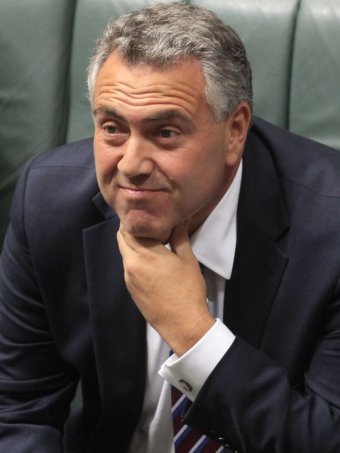
Hockey

Government-controlled prices:

Not all markets are allowed to function freely. Supply and Demand may result in prices that are unfair to buyers or to sellers. Government may set a price and it may differ from the equilibrium price that the market sets.

This action will interfere with the “clearing function” which equilibrium conditions create. A shortage (as in the case of a price that is below equilibrium) or a surplus (as in the case of a price that is above equilibrium) is the result of these government price setting actions.

  • There are two types of price control: price ceilings and price floors. Price ceilings sets a legal maximum price at which a goods can be sold. A price floors  sets a legal minimum price at which a good can be sold.
  • Price Ceilings: In a competitive market, a price that is below the equilibrium causes shortages, because quantity demanded exceeds quantity supplied. The resulting shortage tends to put upward pressure  on price until it goes back to equilibrium and eliminating the shortage. On the  other hand, if the government sets a price ceiling that is above or higher than the equilibrium price, it will have no effect.

Continue reading

What is Economics?

Economic issues affects are daily lives ,whether reading a newspaper on a report on “local market”, watching state of economy on the television news, even discussing with friends and colleagues regarding the price of a product or whether you can afford this or that.

Economic problem and making decision are part and parcel of our lives. What should I buy? Should I go into University or Tafe? Should I go to University or should I work and earn?

Cartoon Wants and Resourses

 What is Economics all about?

For economist, “scarcity” is the central economic problem.

What is scarcity?

Although our wants are unlimited, resources available to fulfill those wants are limited.

What is the solution?

People must make choices as they try to achieve their goals. This is the basic fact of life.

What does choices reflect?

Every choice reflects trade- offs or sacrifice as we are living in a world of scarcity. For every choice we make we pay a cost and that cost in economics is called Opportunity Cost.

This economic problem is also known as “scarcity problem”, which is an universal problem.

Continue reading

Measuring a Nation’s Income

To measure how much output, spending and income has been generated in a given time period, we use National Income Accounts. These accounts measure three things:

1. Output

2. Spending

3. Income

Before computing the National Income the meaning of term ‘National Income’ should be taken up

National Income

National Income is the money value of final flow of output of goods & services produced within an economy over a period of time, usually one year and net income earned from abroad

Gross Domestic Product

Gross Domestic Product (GDP) is the total value of the final goods & services produced within the domestic territorial limits of country over a period of time (1 year).

‘Market Value’ GDP uses market price as it reflects the value of goods. Higher the price higher is the contribution to GDP.

‘Of all’ GDP tries to be comprehensive. It includes all items produced in the economy and sold legally in the market.

‘Final’ GDP includes only the value of final goods and not intermediate goods as it is already included in the price of the final goods. Avoids double counting.

‘Goods and services’ GDP includes tangible goods (cars, clothing etc.) and intangible services (haircut, doctor’s visit etc)

‘Produced’ GDP includes goods and services currently produced and it does not include transaction involving items produced in the past.

‘Within a country’ GDP measures the value of production within the geographic territorial confines of a country, regardless of the nationality of the producer.

‘In a given period of time’ GDP measures the value of production that takes place within a specific interval of time, usually quarterly (3 months) and yearly. Continue reading